
Garage Door Problems
Your Garage Door Opens by Itself — Here's What's Actually Going On
- Updated May 2026
- ~11 Min read
- Pasadena, CA
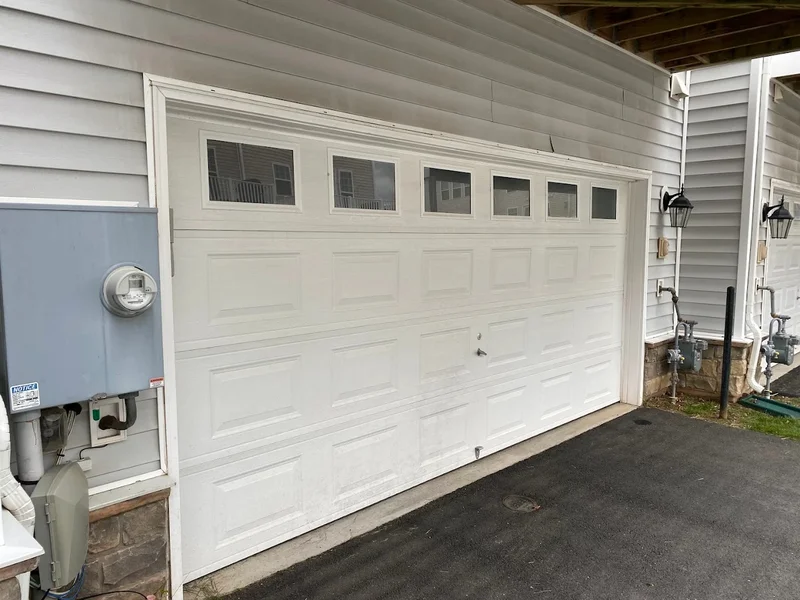
Phantom operation is a real security risk. This guide covers every cause, the steps to diagnose it yourself, and when to call a technician — so you can stop guessing and fix it today.
If your garage door won't stay closed, treat it as an emergency. An open garage is a direct path into your home. Call us now for same-day service
You walked out to your driveway and the garage door was wide open. Nobody touched it. No one pressed a button. It just opened on its own.
This is called phantom operation, and it is more common than most homeowners realize. It is also a real security problem. An open garage door in Pasadena — whether you are home or not — gives anyone on the street a clear path into your property. If your garage door opens by itself, you do not need to panic, but you do need to act.
The good news is that most causes are diagnosable. Some you can fix yourself in under ten minutes. Others need a trained technician. This guide walks you through every likely cause, the steps to try first, and the point where calling a professional is the right move.
Why a Self-Opening Garage Door Is a Security Risk — Not Just a Nuisance
Most people assume the door opened because someone bumped the remote in their pocket. That happens once. When it keeps happening, something is wrong with the system itself.
A garage door that opens or closes without anyone pressing a button is a documented electrical or mechanical issue that technicians refer to as phantom operation. In a city like Pasadena, where homes sit close together and driveways often face the street, a door that randomly opens creates real exposure — to theft, to uninvited entry, and to liability if someone enters and gets hurt on your property.
Beyond security, a malfunctioning opener is a sign the system is under stress. Ignoring it usually turns a small repair into a larger one.
5-Common Causes Why Your Garage Door Keeps Opening by Itself
Weak or Failing Remote Batteries
This is where every diagnosis should start. A remote with dying batteries does not simply stop working — it can behave erratically, sending incomplete or accidental signals to the opener.
If the battery voltage drops below a functional threshold, the remote can fire a partial signal that the opener interprets as a command. If the door opens from the wall keypad or button, check the batteries in your remote before investigating further.
What to do
- Replace with fresh alkaline batteries, not rechargeable ones
- Test the remote from multiple distances after replacing
- If the behavior stops, the batteries were the culprit
- If it continues, move to the next cause
Stuck or Faulty Wall Switch
The wall button inside your garage is wired directly to the opener. When it wears out, it can stick in a partially pressed position. The opener reads this as a continuous or repeated signal, and the door cycles unexpectedly.
Dirt, debris, or general wear causes wall buttons to stick intermittently — this is one of the most common causes of phantom operation among service calls. Sticky buttons are easy to miss because the press does not feel obviously stuck from the outside.
What to do
- Press the wall button firmly several times and feel whether it springs back cleanly
- Look for debris around the button edge
- Disconnect the wall button wire from the opener terminal temporarily
- If the phantom opening stops, the button is confirmed — replace it
Damaged Wiring
The wires running from your wall button to the opener unit, and from the opener to the safety sensors, are exposed to heat, cold, pests, and physical wear over time. A wire that is partially frayed or has a loose connection can create intermittent contact — effectively sending a command to the opener without anyone touching anything.
Damaged or corroded wires that make contact with each other create intermittent electrical connections that activate the opener. This is especially common in older homes or after rodent damage. In Pasadena, attic and garage temperatures can spike well above 100°F in summer, which accelerates insulation breakdown on older wire.
What to do
- Visually inspect the wire running along the wall from the button to the opener
- Look for nicks, exposed copper, or sections with chew marks
- Check where the wire connects at the opener terminal — loose connections are a common culprit
- If you find damaged wire, the wiring should be replaced — not patched with electrical tape
Radio Frequency Interference
Your garage door opener communicates on a radio frequency between 300 and 390 MHz. When interference occurs, it is because an electronic appliance or device in your garage, home, or near your property is emitting signals at the same frequency.
Common interference sources include household appliances, battery chargers, motion detectors, wireless doorbells, fluorescent and LED light bulbs, computers, printers, and nearby infrastructure like electrical transformers and phone towers.
Pasadena sits in proximity to the Freeway corridor, several commercial districts, and dense residential neighborhoods where wireless devices are everywhere. If a neighbor’s garage door opener operates on the same frequency as yours, that alone can cause phantom operation. Older openers using fixed codes are especially vulnerable.
Modern openers with rolling code technology cycle through billions of combinations after each use, making accidental triggering from a neighbor's remote essentially impossible. If your opener is more than 10 to 15 years old, it may be using a fixed code system — an upgrade is a permanent solution.
What to do
- Unplug electronic devices in the garage one at a time and test the door after each
- Check whether the behavior changed after a new device was added to the home
- If your opener is older than 10 to 15 years, consider a rolling-code upgrade
- A technician can test for frequency conflicts and recommend an upgrade if needed
Control Board Glitch
The logic board — the circuit board inside the opener unit — is the brain of the entire system. It processes signals from the remote, wall button, and safety sensors and decides when to move the door.
Faulty logic boards are frequently found in service calls for doors that open unexpectedly, and this is especially common in openers that are 10 or more years old. Electrical surges, heat exposure, and simple age can cause the board to misfire.
When the control board is failing, the symptoms often look like multiple problems at once — the door opens randomly, stops partway, or reverses for no visible reason. A replacement logic board typically costs between $300 and $450, depending on the model. This is not a DIY repair.
How to Stop Your Garage Door From Opening on Its Own
Work through these steps in order. Each one eliminates a possible cause before moving to the next.
Isolate the Transmitters
Remove the batteries from every remote associated with the opener — in your car, on keychains, elsewhere. Leave them out for 24 to 48 hours. If phantom opening stops, reintroduce remotes one at a time to identify the faulty one. Replace or reprogram it.
Check the Wall Button
Disconnect the two-wire cable from the wall button terminal on the opener unit. Observe the door for 24 hours. If phantom opening stops, the wall button circuit is the source — either a stuck button or a wire short. Replace the wall button.
Clear and Reset the Codes
Press and hold the Learn button on the opener for about six seconds — this erases all programmed remote codes. Reprogram only the remotes currently in your household. This eliminates the possibility that an old, unknown remote is triggering the door.
Inspect the Wiring
With the opener unplugged, trace the wire from the wall button terminal along its path. Look for nicks, compressed insulation, or chew marks. Also check the terminal screws — a loose screw can create an intermittent connection just as effectively as a damaged wire.
Worked through all four steps and still having issues? It's likely inside the opener unit itself. Get a professional diagnosis before the problem worsens.
When DIY Is Not Enough
Some causes of phantom operation can be diagnosed and resolved without professional help. Others cannot. If you have worked through all four steps above and the problem continues, the cause is likely inside the opener unit itself.
Many homeowners who reach this point search for answers to why their garage door keeps opening on its own — and often discover the opener has a deeper electrical fault that has been building quietly for months.
Signs That Professional Diagnosis Is the Right Next Step
- The door still opens randomly after all transmitters are disconnected
- The behavior started immediately after a power outage or electrical storm
- The opener is more than 10 years old and has never been serviced
- The opener makes clicking or cycling sounds when no one activated it
- The door opens at a specific time of day consistently — suggesting a timer or program conflict in the logic board
What Pasadena Homeowners Should Know
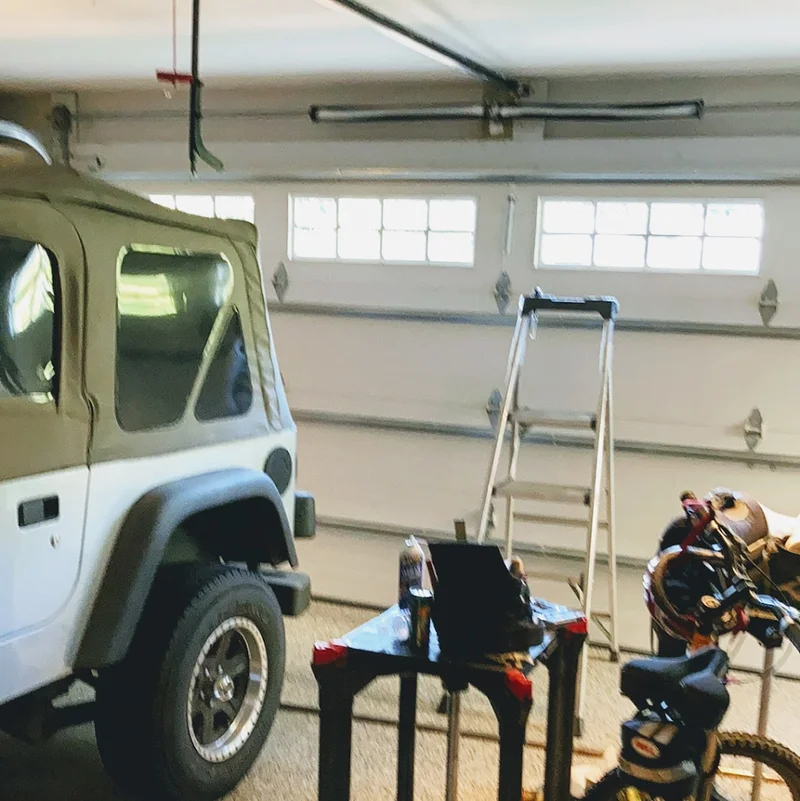
Pasadena’s housing stock is older than many surrounding cities. A large portion of homes were built between the 1940s and 1980s, and many of those properties still have original garage wiring or openers that predate rolling code technology.
If your opener was installed before 2010, it is likely operating on a fixed code system. Fixed code openers are increasingly vulnerable as the density of wireless devices in any neighborhood grows. More routers, smart home hubs, and wireless doorbells mean more signals competing on the same frequencies your opener uses.
For homeowners in older Pasadena neighborhoods, a full system evaluation is often more cost-effective than repeated service calls on aging equipment. Professional garage door repair in Pasadena includes opener assessment, wiring inspection, and a clear recommendation on whether to repair or replace — without pressure toward unnecessary upgrades.
Pasadena’s housing stock is older than many surrounding cities. A large portion of homes were built between the 1940s and 1980s, and many of those properties still have original garage wiring or openers that predate rolling code technology.
If your opener was installed before 2010, it is likely operating on a fixed code system. Fixed code openers are increasingly vulnerable as the density of wireless devices in any neighborhood grows. More routers, smart home hubs, and wireless doorbells mean more signals competing on the same frequencies your opener uses.
For homeowners in older Pasadena neighborhoods, a full system evaluation is often more cost-effective than repeated service calls on aging equipment. Professional garage door repair in Pasadena includes opener assessment, wiring inspection, and a clear recommendation on whether to repair or replace — without pressure toward unnecessary upgrades.
Expert Tips for Pasadena Homeowners
Tip 1
Test your remote from outside the car first. Metal car bodies can block or distort the signal — a weak battery combined with vehicle interference can mimic a more serious problem.
Tip 2
Know the difference between phantom opening and reversal. Safety sensors near the floor shoot an invisible beam across the opening. If they are misaligned or dirty, the door may stop and reverse mid-close — which can look like the door opened on its own. Clean the sensor lenses and check alignment before assuming the opener is at fault.
Tip 3
Log when it happens. If the door opens at a similar time of day or in similar weather conditions, write it down. Patterns point to causes. A door that opens every afternoon during peak wireless traffic hours points toward interference. One that opens after rain points toward wiring or sensor moisture.
Do not use electrical tape on damaged opener wiring. It is a temporary measure at best. Electrical tape degrades with heat cycles and does not prevent intermittent contact between wires. Replace damaged sections properly.
Never DIY — Spring Replacement, Cable Tensioning
Torsion springs store enormous energy—sometimes exceeding 800 pounds of force. When they release unexpectedly during an amateur repair attempt, the result can be catastrophic injury. This is not cautionary language. It’s physics. Every year, homeowners are hospitalized from garage door spring accidents. The $100–$150 you save doing it yourself is not worth it. Cable tensioning carries the same risk. Leave both to a licensed tech with the right winding bars and torque knowledge. It costs what it costs. Pay it.
Get a Honest, Flat-Rate Quote in Pasadena
Licensed, insured, and CSLB-verified. We serve all Pasadena ZIP codes — 91101, 91103, 91104, 91105, 91106, 91107. Same-day service available.
Common Questions About Garage Door Opener Problems
Why does my garage door open by itself at night?
Can a neighbor's remote open my garage door?
Is a garage door opening by itself dangerous?
My garage door opens by itself after a power outage — what happened?
I disconnected everything and the door still opens — what now?
How much does it cost to fix a garage door that opens by itself?
Garage Door Keeps Opening on Its Own? Stop Guessing — Get It Diagnosed
A garage door that opens by itself is telling you something is wrong. It might be a $10 battery swap. It might be a $400 control board. The only way to know is to work through the causes systematically — and stop guessing.
If you are in Pasadena and the problem persists after checking your remotes, wall button, and wiring, do not keep cycling through resets hoping it resolves itself. The opener will not self-correct an internal fault. A trained technician can diagnose it in a single visit and tell you exactly what the repair involves before touching anything.