
Belt Drive vs. Chain Drive vs. Direct Drive Garage Door Openers: Which One Is Right for Your Pasadena Home
Garage Door Openers
Belt Drive vs. Chain Drive vs. Direct Drive Garage Door Openers: Which One Is Right for Your Pasadena Home
-
Updated July 2026 -
~14 Min read -
Pasadena, CA
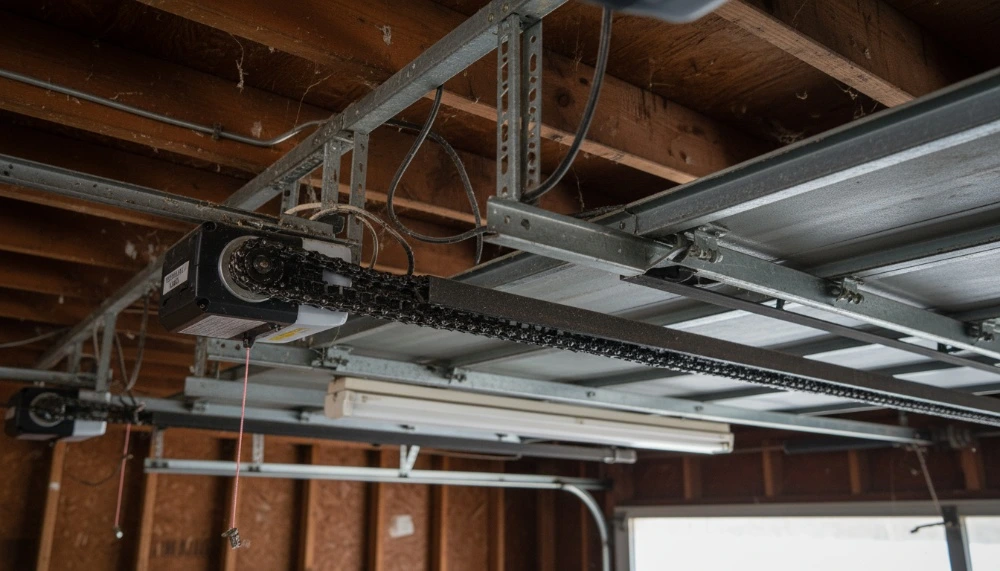 Choosing a garage door opener comes down to three drive types: belt, chain, and direct drive. The right one for your home depends mostly on noise tolerance, budget, and where your garage sits relative to your living space. In Pasadena, where many homes have attached garages or converted garage spaces close to bedrooms and living areas, the drive type you pick matters more than in newer developments with detached garages set far from the house.At Garage Door Pros Pasadena, we install and service all three opener types across Pasadena, South Pasadena, Altadena, and the surrounding San Gabriel Valley. This guide breaks down exactly how each drive type works, what it costs over time, and which one fits your specific garage setup.
Quick answer: attached or converted garage, choose belt drive or direct drive for quiet operation. Detached garage far from living space, chain drive saves money with no real downside. Want the lowest long-term maintenance, direct drive is the strongest overall value.
How Each Garage Door Opener Drive Type Works
All three opener types do the same basic job. A motor mounted at the back of the garage drives a trolley along a rail, and the trolley pulls the garage door open and closed using an arm connected to the top of the door. The difference between belt, chain, and direct drive comes down to what physically moves that trolley, and that difference is what creates the gap in noise, maintenance, and lifespan between the three.
Chain Drive
A chain drive opener uses a metal chain, similar to a bicycle chain, to pull the trolley along the rail. It remains the most common opener sold today because it is the cheapest to manufacture and install. The chain provides strong, reliable pulling power, which is why chain drive openers are still popular for heavier doors like wood carriage-style doors. The tradeoff is noise. Metal moving against metal creates a rattling sound that travels through the garage structure and into any attached rooms.
Belt Drive
A belt drive opener replaces the metal chain with a reinforced rubber or fiberglass belt. It performs the same job, but because it is not metal striking metal, it runs dramatically quieter. Most homeowners describe a belt drive opener as close to silent from inside the house. Belt drive openers cost more upfront than chain drive models, but modern belts are rated for the same load capacity as chain drive systems, so quiet operation no longer means sacrificing pulling power. A correctly sized opener install makes the biggest difference in how quiet it actually runs day to day.
Direct Drive
Direct drive openers work differently from both chain and belt systems. Instead of a chain or belt pulling a separate trolley, the motor itself is built into the trolley and travels along the rail. There is no chain, no belt, and far fewer moving parts overall, which means less that can wear out and less vibration. Direct drive openers are the newest of the three technologies and typically carry the highest upfront cost, but they also tend to have the longest expected lifespan and the least maintenance.
Which Opener Is Quietest? Noise and Vibration Compared
Noise is the number one factor that separates these three opener types in real-world use, and it is the question we hear most often from Pasadena homeowners. Belt drive openers are generally the quietest option, followed closely by direct drive. Chain drive openers are the loudest of the three because the metal chain creates mechanical noise and transfers vibration through the garage frame into the walls and ceiling. If your door already opens on its own unexpectedly, that is usually a limit or sensor issue separate from drive type, but worth ruling out first.
Why Noise Matters More in Attached and Converted Garages
A large share of homes in neighborhoods like Bungalow Heaven, Madison Heights, and the older streets near South Pasadena were built with attached garages directly beneath or adjacent to bedrooms. Many of these garages have also been converted into home offices, gyms, or accessory dwelling units, which puts living space even closer to the opener mechanism. If your garage falls into either category, a chain drive opener can genuinely disrupt sleep or work. Vibration transfer through shared framing is often a bigger issue than airborne sound, and belt drive or direct drive openers largely eliminate that vibration transfer.
Cost, Lifespan, and Long-Term Value
Upfront price is only part of the cost picture. Chain drive openers represent the most budget-friendly entry point and remain a solid choice when noise is not a concern. Belt drive openers sit in the middle of the pricing range and deliver the best balance of quiet operation and reasonable cost for most attached-garage homes. Direct drive openers occupy the premium tier, with the tradeoff of higher upfront investment against lower long-term maintenance and the longest-lasting mechanism of the three.A well-maintained chain drive opener typically lasts 10 to 15 years, though the chain often needs adjustment or replacement within that window as it stretches with use. Belt drive openers have a similar overall lifespan but require far less maintenance since the belt does not stretch the way a chain does. Direct drive openers, because the design eliminates the chain or belt entirely, often see the least mechanical wear over time and can outlast both alternatives when properly installed. When it is time to swap in a new opener, we walk you through which tier makes sense for your budget. For repair costs beyond just openers, see our full pricing guide.
Choosing the Right Opener for Your Garage Type
Attached Garages
If your garage shares a wall with living space, belt drive or direct drive is the clear recommendation. Most homeowners who switch from chain drive notice the noise difference immediately, particularly for early morning or late night door operation.
Detached Garages
If your garage sits away from the house with no shared walls, chain drive becomes a much more practical option. You get the lowest upfront cost with strong pulling power and durability, without the noise tradeoff mattering much.
Converted Garages and ADUs
If your garage has been converted into a home office, gym, studio, or accessory dwelling unit, treat it the same as an attached garage regardless of its original distance from the main house. Any space where people are spending time and expecting quiet should use belt drive or direct drive.
Climate Considerations for San Gabriel Valley Homes
Pasadena and the surrounding San Gabriel Valley see hot, dry summers, and garage interiors often run even hotter than outside temperatures due to poor ventilation and heat-absorbing door materials. Belt drive material, while significantly improved from older rubber compounds, can degrade faster under sustained high heat and UV exposure, particularly in garages with south or west-facing doors. Chain drive openers are largely unaffected by heat since metal chains do not degrade from temperature. Direct drive openers benefit from a sealed motor housing that protects internal components from dust and heat buildup, a genuine advantage in Pasadena’s dry, dusty summer conditions.
Horsepower, Smart Compatibility, and Maintenance
Drive type and horsepower are two separate decisions. Drive type determines noise, maintenance, and lifespan. Horsepower determines whether the opener has enough strength to lift your specific door. Most standard single-car and double-car doors work fine with a half horsepower opener, while heavier wood or oversized doors typically need three-quarter horsepower or higher, regardless of drive type.Modern openers across all three drive types generally support smartphone app control through systems like MyQ, so smart home compatibility depends on the specific model rather than the drive type. On maintenance, belt drive openers need very little routine care beyond an occasional visual inspection. Chain drive openers need periodic lubrication, typically every six months to a year, and occasional re-tensioning as the chain naturally stretches. Direct drive openers require the least maintenance of the three since there is no chain or belt to service.LiftMaster offers well-regarded belt drive and chain drive models with strong warranty coverage, along with jackshaft-style direct drive options for garages with limited ceiling clearance. Chamberlain produces similar models at a slightly lower price point, and Genie is known for its direct drive Aladdin Connect line, pairing a quiet, low-maintenance mechanism with strong smart home integration.Power outages happen occasionally across Pasadena, particularly during high wind events or planned utility shutoffs during fire season. Most current-generation openers, across all three drive types, now offer battery backup as either a standard feature or an available add-on, letting the door open and close a limited number of times even without grid power. Confirm this feature is included rather than assuming it comes standard on every model.
How Long Does Installation Actually Take
Most single opener replacements, regardless of drive type, take between 90 minutes and three hours for a licensed technician working alone, assuming the existing rail mounting points and electrical setup are compatible with the new unit. Direct drive openers tend to fall on the shorter end of that range due to simpler rail assembly. Chain and belt drive installations take a similar amount of time to each other since the rail and trolley assembly process is nearly identical between the two.Complications that extend installation time include damaged or outdated rail brackets, electrical outlets that need to be relocated or added, ceiling height restrictions that require a jackshaft-style opener instead of a standard rail-mounted unit, and doors that need spring or hardware adjustments alongside the opener swap. A same-day quote and inspection before installation day helps avoid surprises once work begins.
Common Mistakes Homeowners Make When Choosing an Opener
Buying based on horsepower alone is a common mistake. A higher horsepower rating affects lifting strength, not noise, so a strong chain drive model can still be louder than a lower horsepower belt drive unit. Another mistake is ignoring the garage’s relationship to living space, since this single factor affects daily quality of life more than almost any other opener specification. Skipping maintenance regardless of drive type also shortens lifespan, and choosing based on price alone without factoring in years of ownership often costs more in the long run when noise becomes a daily irritation in an attached garage.
Frequently Asked Questions
What’s the difference between belt drive and chain drive openers?
The core difference is what pulls the trolley along the rail. Belt drive uses a reinforced rubber or fiberglass belt, which runs quietly with minimal vibration. Chain drive uses a metal chain, which is more affordable but noticeably louder and transfers more vibration through the garage structure.
Which garage door opener is the quietest?
Belt drive openers are generally the quietest, producing minimal sound and vibration during operation. Direct drive openers come in a close second with a low, steady hum. Chain drive openers are the loudest of the three due to metal-on-metal contact.
Is a direct drive opener worth the extra cost?
For most homeowners planning to stay in their home longer than five years, yes. Direct drive openers have fewer moving parts than belt or chain systems, which typically means less maintenance, fewer repairs, and a longer overall lifespan despite the higher upfront price.
How long does a chain drive opener last?
A properly maintained chain drive opener typically lasts 10 to 15 years. Regular lubrication and occasional chain tensioning are needed to reach the higher end of that range, since the chain naturally stretches and wears with use over time.
Which opener is best for an attached garage?
Belt drive or direct drive openers are best for attached garages. Both minimize noise and vibration transfer into shared walls, which matters most when the garage sits next to or beneath a bedroom or other living space.
Do belt drive openers need maintenance?
Belt drive openers require very little maintenance compared to chain drive systems. Occasional inspection for belt wear and proper tension is generally sufficient, since there is no chain lubrication or tensioning needed.
The core difference is what pulls the trolley along the rail. Belt drive uses a reinforced rubber or fiberglass belt, which runs quietly with minimal vibration. Chain drive uses a metal chain, which is more affordable but noticeably louder and transfers more vibration through the garage structure.Belt drive openers are generally the quietest, producing minimal sound and vibration during operation. Direct drive openers come in a close second with a low, steady hum. Chain drive openers are the loudest of the three due to metal-on-metal contact.For most homeowners planning to stay in their home longer than five years, yes. Direct drive openers have fewer moving parts than belt or chain systems, which typically means less maintenance, fewer repairs, and a longer overall lifespan despite the higher upfront price.A properly maintained chain drive opener typically lasts 10 to 15 years. Regular lubrication and occasional chain tensioning are needed to reach the higher end of that range, since the chain naturally stretches and wears with use over time.Belt drive or direct drive openers are best for attached garages. Both minimize noise and vibration transfer into shared walls, which matters most when the garage sits next to or beneath a bedroom or other living space.Belt drive openers require very little maintenance compared to chain drive systems. Occasional inspection for belt wear and proper tension is generally sufficient, since there is no chain lubrication or tensioning needed.
Get the Right Opener Installed by Local Pasadena Pros
Choosing between belt drive, chain drive, and direct drive comes down to your specific garage, your budget, and how much you value quiet operation. Garage Door Pros Pasadena installs and services all three opener types for homeowners throughout Pasadena, South Pasadena, Altadena, and the greater San Gabriel Valley, with LiftMaster, Chamberlain, and Genie models across every horsepower range.
Call us at (626) 707-0240 or visit us at 837 S Fair Oaks Ave, Pasadena, CA 91105 to schedule a free opener consultation.
Call (626) 707-0240
Not Sure Which Opener Fits Your Garage?
Tell us your garage type and we will recommend the right drive type on the phone, free.
Related Services
-
Garage Door Opener Installation
-
Garage Door Opener Replacement
-
Garage Door Repair
-
Garage Door Maintenance