
Garage Door Sensor Repair Pasadena, CA
Same-day safety sensor diagnosis and repair across Pasadena. Sun glare, dust, misalignment, or wiring — we find the real cause and fix it right. No bypasses, no shortcuts, just working sensors that keep your family safe.
Call (626) 707-0240 for Same-Day Service
What Does Sensor Repair Cost in Pasadena?
Most sensor problems in Pasadena are simple fixes — cleaning, realignment, or sun shielding — that run $85–$150. A full sensor pair replacement with parts and labor typically falls between $125–$290, depending on your opener brand. We provide a free upfront estimate before any work begins, and we will always tell you if cleaning is likely to solve the problem before recommending replacement.
Most common cause in Pasadena: afternoon sun hitting the receiver eye, especially on west- and south-facing garages. If your door only refuses to close at the same time each day, sun glare is almost certainly the culprit.
Is This a Safety Sensor or a Smart-Home Sensor?
Before troubleshooting, it helps to know which “garage door sensor” you actually have, because the term covers two different things:
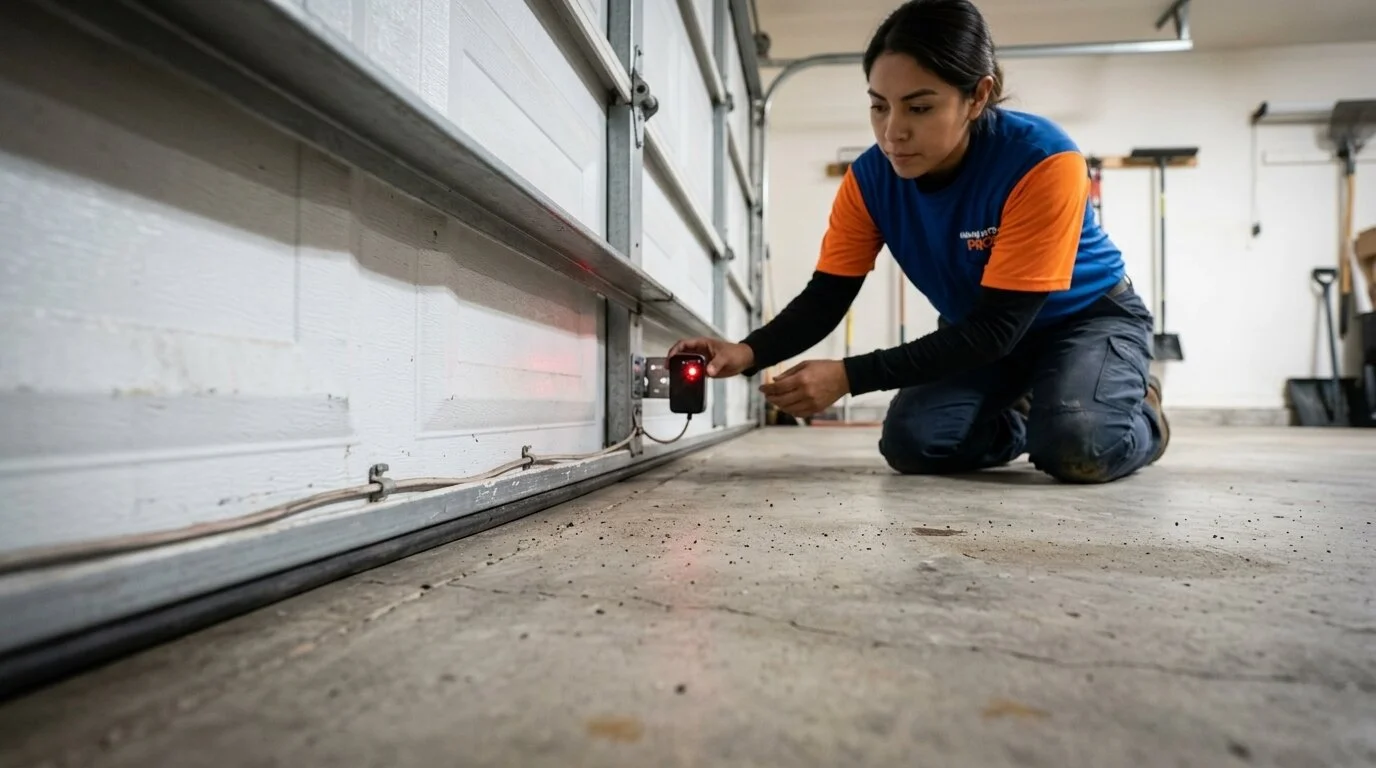
- Photoelectric safety sensors (photo-eyes) — the pair of small units mounted about 6 inches off the floor on either side of the door track. One sends an infrared beam, the other receives it. If the beam breaks, the door won’t close. This is the safety system this page covers, and it’s required by federal law on every opener made after 1993.
- Smart-home position sensors — separate add-on devices (reed switches, tilt sensors, Wi-Fi/Z-Wave modules) that tell a phone app whether the door is open or closed. These are home-automation accessories, not a safety system, and they’re a different repair entirely.
If your door won’t close, reverses on its own, or the opener light is flashing, you’re almost certainly dealing with the photoelectric safety sensors — keep reading.
How Garage Door Safety Sensors Work
Every modern garage door opener has two small sensor units low on the door frame: a transmitter that sends a continuous infrared beam, and a receiver that confirms it’s getting that beam. As long as the beam is unbroken and the sensors are aligned, the opener allows the door to close. If anything blocks, scatters, or overwhelms that beam — a box, a pet, dust, or direct sunlight — the receiver tells the opener’s logic board to stop and reverse the door instead of letting it close on an obstruction.
This system exists because of a federal safety standard called UL 325. Since 1993, every residential garage door opener sold in the U.S. has been required to include this kind of entrapment-protection system. It’s not a manufacturer feature you can opt out of — it’s the law, and for good reason: it’s prevented countless injuries from doors closing on children, pets, and vehicles.
Garage Door Sensor Light Colors & What They Mean
This is one of the most common points of confusion, because every opener brand uses a different color scheme. Here’s how to read yours:
A blinking or unlit light is the actual problem sign, regardless of which color is blinking.
.sensor-tbl{width:100%;border-collapse:collapse;font-family:’Poppins’,sans-serif;font-size:16px;margin:20px 0}.sensor-tbl th{background:#1E3C95;color:#FFF;padding:14px 16px;text-align:left;font-family:’Saira Condensed’,sans-serif;font-weight:800;text-transform:uppercase;font-size:16px}.sensor-tbl td{padding:12px 16px;border-bottom:1px solid #E7E7E7}.sensor-tbl tr:nth-child(even){background:#FAFAFA}.sensor-tbl tr:nth-child(odd){background:#FFF}
| Brand | Transmitter (Sending) | Receiver (Receiving) | Normal State |
|---|---|---|---|
| Chamberlain / LiftMaster / Craftsman (post-1997) | Amber / Yellow | Green | Both lights solid, no blinking |
| Genie Safe-T-Beam | Red | Green | Both lights solid |
| Genie (older models) | Red | Red | Both lights solid |
| Marantec | Green | Red | Both lights solid |
On Chamberlain and LiftMaster systems, a flashing main motor light paired with the door refusing to close is the standard signal for a sensor fault.
Why Garage Door Sensors Fail in Pasadena, CA
Pasadena’s climate and housing stock create a specific, predictable set of sensor failure patterns that are different from what you’d see in a humid or snowy climate.
Afternoon Sun Glare
Pasadena sits at the base of the San Gabriel Mountains, and many homes — particularly in Hastings Ranch — have garages that catch direct, low-angle sun in the late afternoon. When that light hits the receiver eye at the right angle, it can overwhelm the infrared signal even when sensors are perfectly aligned.
Santa Ana Wind Dust
Seasonal Santa Ana wind events kick up dust and debris across the San Gabriel Valley. Even a thin film on the sensor lens is enough to weaken or scatter the beam, which is why sensor problems often spike during windy stretches of the year.
Wildfire Ash (Foothill Properties)
Homes nearer the foothills and Eaton Canyon can pick up fine ash and soot on exterior surfaces, including garage sensor lenses, during fire-season events. This produces the same symptom as dust: a film that blocks or scatters the beam.
Wiring Wear
Older low-voltage wiring runs are more prone to corrosion, pinched wires from storage shelving, or rodent damage — all of which can cause intermittent sensor failure that looks like misalignment but is actually electrical.
Vibration & Aging Hardware
Pasadena’s housing stock is older than the national average — a large share of homes in neighborhoods like Bungalow Heaven and Old Pasadena were built well before 1960. A garage door opens and closes roughly 1,500 times a year, and decades of vibration gradually loosen mounting brackets.
Common Symptoms & What They Actually Mean
.symp-tbl{width:100%;border-collapse:collapse;font-family:’Poppins’,sans-serif;font-size:16px;margin:20px 0}.symp-tbl th{background:#1E3C95;color:#FFF;padding:14px 16px;text-align:left;font-family:’Saira Condensed’,sans-serif;font-weight:800;text-transform:uppercase}.symp-tbl td{padding:12px 16px;border-bottom:1px solid #E7E7E7}.symp-tbl tr:nth-child(even){background:#FAFAFA}.symp-tbl tr:nth-child(odd){background:#FFF}
| Symptom | Likely Cause | Typical Fix |
|---|---|---|
| Door closes a few inches, then reverses | Obstruction or misalignment | Clear the path, realign sensors |
| Sensor light blinks only in the late afternoon | Sun interference | Sun shield or sensor repositioning |
| Both sensor lights are off | Power or wiring failure | Check wiring, professional inspection |
| Works fine some days, fails on others | Marginal alignment, vibration | Bracket tightening and recalibration |
| Smart app reports “misaligned sensors” | Physical misalignment flagged by opener | Manual realignment, then app reset |
| Door won’t close, nothing visibly blocking sensors | Dirty lens or sun glare | Clean lens first, then check for glare |
Garage Door Sensor Alignment: What You Can Try First
Many sensor issues are fixable in a few minutes without a service call. Here’s the order to work through:
- Clear the path. Remove anything between the two sensors — boxes, trash cans, cobwebs, even a stray cable.
- Clean both lenses. Use a soft, dry or slightly damp microfiber cloth. Avoid glass cleaners or solvents, which can haze the plastic lens.
- Check alignment. Both sensors should sit at the same height and point directly at each other. If a bracket has been bumped, loosen the mounting screw slightly and adjust until the receiver’s light goes solid.
- Test for sun interference. If the issue only happens at a specific time of day, shade the receiver with your hand. If the door closes immediately, sunlight is the cause.
- Inspect visible wiring. Look for frayed, pinched, or disconnected wires near the brackets and at the motor head.
- Power-cycle the opener. Unplug for about 30 seconds, then reconnect. This clears minor logic-board glitches.
If you’ve worked through these steps and the light still won’t hold steady, or you find damaged wiring, that’s the point to call a professional rather than keep adjusting — repeated forced alignment can damage the bracket or mask a wiring fault that gets worse over time.
Need a Hand? Call (626) 707-0240
Sensor Repair vs. Sensor Replacement
Not every sensor problem needs new hardware. Here’s how we decide which one your situation needs:
Repair (cleaning, realignment, wiring fix) is usually the right call when: the sensors are less than 5–7 years old, the lights respond to cleaning or adjustment, and there’s no visible lens damage or corrosion.
Replacement typically makes more sense when: the sensor housing is cracked, the lens is scratched or scattering light even when clean, the unit has been exposed to repeated sun or wildfire-ash damage, or the sensors are old enough that matching parts are getting hard to source.
As a rule of thumb, if a sensor pair has needed more than two service calls in a year for the same symptom, replacement usually costs less over time than repeated repair visits.
Is It the Sensor or the Opener?
This is one of the most common points of misdiagnosis. If your opener motor runs, the light on the ceiling unit turns on, and the chain or belt moves — but the door still won’t close — the opener itself is almost always fine. The fault is in the safety sensor circuit, not the motor.
True opener failures (a dead motor, stripped gears, a burnt-out logic board) usually come with their own distinct symptoms: the door not moving at all, grinding noises, or no response from the remote or wall button. We diagnose both during every service call so you’re not paying to replace a part that wasn’t the problem.
Is It Legal or Safe to Bypass Garage Door Sensors?
No. Garage door safety sensors are required under UL 325, the federal entrapment-protection standard that’s applied to every residential opener manufactured since 1993. Disconnecting, taping over, or otherwise bypassing them removes the system that stops a door from closing on a person, pet, or vehicle, and it has been a contributing factor in documented injury cases.
If your sensors aren’t working, the safe and legal fix is repair or replacement — not bypassing the system, even temporarily.
Garage Door Sensor Repair Cost in Pasadena, CA
We believe in pricing transparency, so here’s what sensor-related service typically costs, based on standard market rates for this type of work. We provide a free estimate before any work begins.
.cost-tbl{width:100%;border-collapse:collapse;font-family:’Poppins’,sans-serif;font-size:16px;margin:20px 0}.cost-tbl th{background:#1E3C95;color:#FFF;padding:14px 16px;text-align:left;font-family:’Saira Condensed’,sans-serif;font-weight:800;text-transform:uppercase}.cost-tbl td{padding:14px 16px;border-bottom:1px solid #E7E7E7}.cost-tbl tr:nth-child(even){background:#FAFAFA}.cost-tbl tr:nth-child(odd){background:#FFF}.cost-tbl .price{font-weight:700;color:#1E3C95}
| Service | Typical Cost Range |
|---|---|
| Professional diagnostic visit | $95 – $150 |
| Cleaning & realignment (no parts needed) | $85 – $150 |
| Full sensor pair replacement (parts + labor) | $125 – $290 |
| Wiring repair/replacement | Varies — quoted on inspection |
| DIY replacement part only | $18 – $75 |
Get Your Free Quote — Call (626) 707-0240
Our Process
01
Diagnose
We check sensor alignment, lens condition, wiring, and the opener’s logic board response to find the actual cause — not just the symptom.
02
Explain
We tell you what’s wrong, what it costs to fix, and whether repair or replacement makes more sense, before any work starts.
03
Fix
Most sensor repairs are completed same-visit, typically in 20–60 minutes depending on whether it’s a realignment or a full sensor swap.
04
Verify
Every job ends with an obstruction test to confirm the door reverses correctly — the actual safety check the system is supposed to perform.
Why Garage Door Pros?
Garage Door Pros brings years of hands-on experience completing residential and commercial garage door service across Pasadena and the San Gabriel Valley. We diagnose the full system — sensor, opener, and wiring — on every call, not just the most obvious symptom.
What sets us apart:
- Real cost ranges published upfront — no “call for pricing” games
- Pasadena-specific solutions: sun shielding, dust-resistant positioning, wildfire-ash cleanup
- Full safety verification on every visit — obstruction test performed, not skipped
- Bypass requests always declined — repaired the right way, every time
Service Areas We Cover in Pasadena
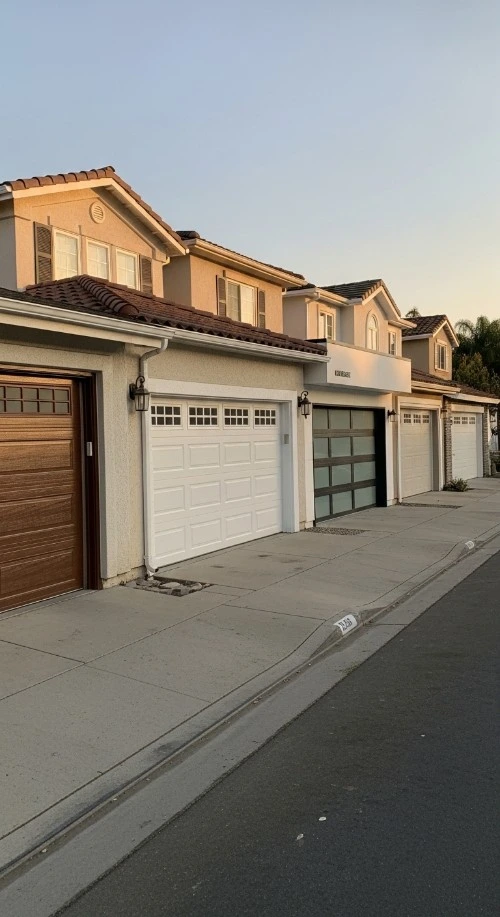
Garage Door Pros provides same-day sensor repair to homeowners throughout Pasadena, including Old Pasadena (91101, 91103), Bungalow Heaven (91104), San Rafael Hills (91105), Madison Heights / East Pasadena (91106), and Hastings Ranch (91107). We also serve nearby Altadena, South Pasadena, and San Marino.
Call (626) 707-0240 for Local Sensor Repair
Sensors Not Working?
We’ll Fix Them Today.
Same-day repairs, honest pricing, and 24/7 emergency response across Pasadena and Los Angeles County. Call now — our technicians are ready.
(626) 707 0240
Frequently Asked Questions
Do garage door sensors go bad over time?
Yes. Sensors can fail from age, sun exposure, moisture, or internal wear, even with no visible damage. If cleaning and realignment don’t restore a steady light, replacement is usually the next step.
Why is my garage door sensor light blinking?
A blinking light — regardless of its color — almost always means the beam isn’t connecting: dirt on the lens, misalignment, an obstruction, or sun glare are the most common causes.
Should both garage door sensor lights be the same color?
No, on most brands. Chamberlain, LiftMaster, and Craftsman normally show one amber and one green light. What matters is that both are solid, not blinking — not that they match.
Can sunlight really stop my garage door from closing?
Yes. Direct sun hitting the receiver lens at the right angle can overwhelm the infrared beam, even when the sensors are properly aligned. This is especially common on west-facing Pasadena garages in the late afternoon.
Can I bypass my garage door sensors temporarily?
No. Bypassing the sensors removes a federally required safety feature (UL 325) and isn’t safe at any duration. Repair or replacement is the only recommended fix.
How much does garage door sensor repair cost in Pasadena?
Cleaning and realignment typically runs $85–$150. A full sensor pair replacement, including parts and labor, usually falls between $125–$290, depending on the brand and model.
Are garage door sensors interchangeable between brands?
No. Sensors are matched to your specific opener’s electrical signal, so Genie sensors won’t work on a LiftMaster opener, for example. Always replace with a compatible pair for your motor’s brand and model.